Programme Setup
Part of Working with content affiliates
Planning seasonal content with affiliate publishers
Plan seasonal affiliate content far enough ahead for publishers to research and produce it, then keep the information current through launch.
Plan seasonal affiliate content far enough ahead for publishers to research and produce it. Keep the information current through launch. A seasonal brief should set out what is genuinely available, when terms change and who will notify publishers if plans move.
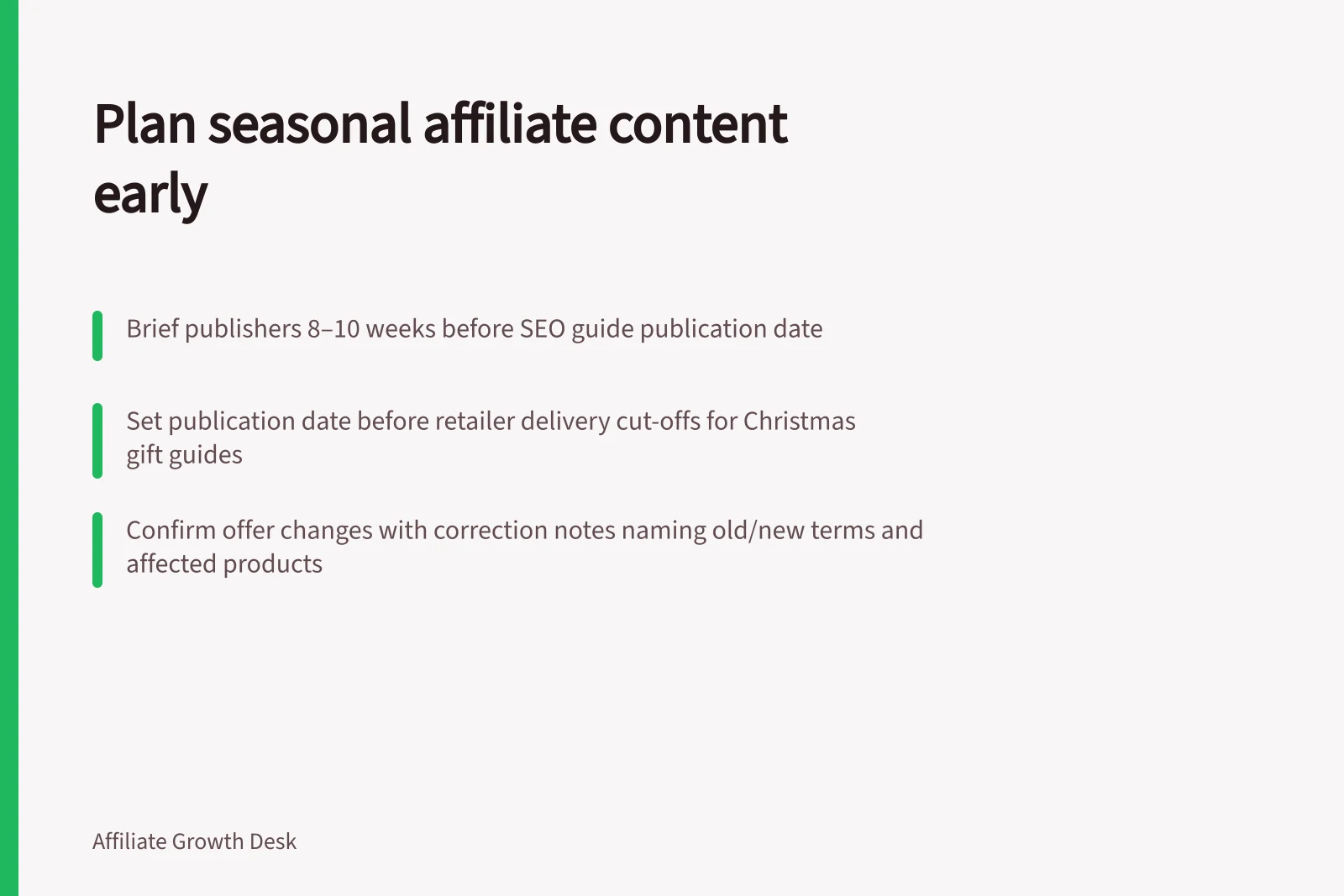
For SEO-led guides, brief publishers 8–10 weeks before the target publication date. Allow four weeks for writing, leaving a further four to six weeks before publication.
Work back from the reader's decision
Choose the buying or planning moment, not just an internal campaign date. A gift guide may need to publish before delivery cut-offs; a travel comparison may need verified availability before a peak period. Ask publishers when they need product samples, facts and offers to create useful content. Leave room for their editorial process rather than sending a last-minute slogan and expecting a substantive guide.
Use the 2026 calendar as a reference: Click Frenzy Mayhem was in the third week of May, EOFY in late June, Black Friday to Cyber Monday in late November, and Boxing Day on 26 December. Also map Christmas, back-to-school, Valentine's Day, Easter, Mother's Day, Halloween and Singles' Day; confirm each year's dates before booking.
For Christmas gift guides, confirm the applicable delivery cut-off with the retailer and record when it was confirmed. Set the publication date to precede that cut-off, allowing for the publisher's agreed production time.
Build a shared timeline with dates for fact sheets, samples, offer confirmation, content review for factual errors and final changes. Label tentative terms as tentative. Do not announce a discount, stock level or delivery promise that the business has not approved. The ACCC can require businesses to back up claims about their products or services and may take compliance or enforcement action if a business misleads.
Include the publisher and the relevant programme contact in the timeline. If you work through Commission Factory or impact.com, include that contact in the brief hand-off; record who sends the brief, confirms the offer, reviews facts and notifies the publisher of changes.
Keep the brief stable where possible
Provide product identifiers, intended audience, key differences from previous versions, exclusions and the current landing page. If an offer changes, send a concise correction that names the old and new terms, effective time and affected products. A publisher with a scheduled article needs to know whether an image, table or call to action also needs editing.
Use a correction note with fields for the old and new terms, effective time, affected products and whether an image, table or call to action needs editing. Send it to every publisher using the earlier facts, and identify who will confirm the change is live.
Awin's product-feed guidance describes feeds as providing product or service details such as stock levels, along with product links and item specifications publishers can browse. Use that mechanism where available for routine changes, but don't assume an editorial paragraph will refresh when a feed changes; flag material seasonal changes directly to partners who used the earlier facts.
Prepare for a peak and an end
Check that product pages and tracking destinations remain live during the promotion. Decide what happens to evergreen articles when the seasonal offer ends: remove the time-limited claim, replace it with current information or archive the page. Give publishers the end date and a post-campaign contact.
Review the plan afterwards using actual content and customer outcomes. Do not treat a single attribution report as the whole value of an article. Note which facts arrived late, which questions publishers needed answered and which changes caused rework. The next seasonal cycle should start with a better source pack and a more realistic timetable.