Publisher Recruitment
Part of Working with content affiliates
Supporting comparisons without demanding a favourable verdict
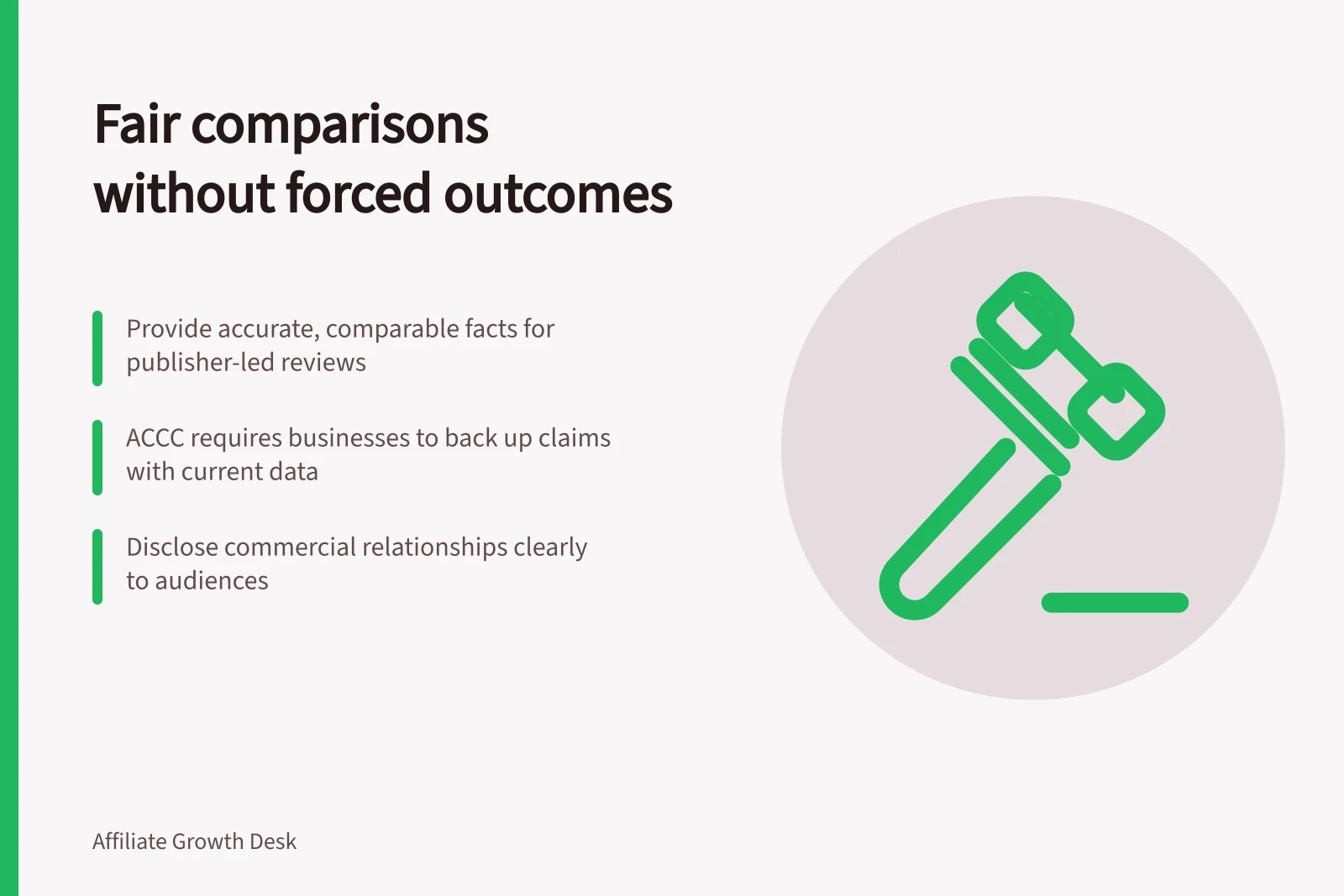
Support an affiliate comparison by giving the publisher accurate, comparable facts and allowing an independent conclusion.
Support an affiliate comparison by giving the publisher accurate, comparable facts and allowing an independent conclusion. Request corrections to errors with evidence. Do not make a positive ranking or verdict the condition for supplying information or maintaining a commercial relationship.
Supply the same dimensions a buyer needs
Ask what the comparison covers: price, size, compatibility, setup, support or another decision factor. Provide current values and qualifiers for each factor where the brand has them. If a feature is absent, say so. Hiding a limitation can make the comparison less useful and may prompt a misleading claim.
The ACCC can require businesses to back up claims they make about their products or services, and accepts reports about possible misleading or false claims. A brand should therefore check whether its own data is current before contesting a publisher's finding.
If the comparison uses an outdated model or price, send the corrected source and date. If the publisher gives a competitor a better score for a defensible reason, that is an editorial judgement rather than a factual error.
Key Factors to Include in an Affiliate Product Comparison
- Price
- Current pricing with GST and delivery fees
- Support
- Australian-based customer service hours, warranty length
Define a clean review process
Offer a fact-check window for the product's specifications, claims and commercial terms. Keep comments tied to verifiable points. “The tested model includes two attachments, not one” is actionable; “Make our product the winner” is not.
If the publisher allows pre-publication review, agree that it is for factual accuracy and disclosure, not approval of the whole opinion.
Ask the publisher to explain its method and intended audience. A product may be best for one user and poor for another. A fair limitation can help the right buyer choose.
Do not request a test result that neither side has performed or suggest that a supplied sample proves long-term reliability.
Keep the relationship visible
Make the commercial relationship clear to the audience. Agree how a disclosure will appear near the content or link in a way the audience can notice. Disclosure does not make a misleading comparison acceptable; the facts and overall impression still need review.
After publication, monitor factual changes. When a price or model changes, notify the publisher promptly with the corrected value, effective date and source, and preserve the publisher's ability to update its own verdict.
Balancing Commercial Relationships and Editorial Independence
- Pros
- Clear disclosure of affiliate relationship builds trust with Australian consumers
- Cons
- Failure to disclose may breach ACCC advertising rules and lead to penalties